Natural Supplements & Biohacking for Brain Injury Recovery: What the Science Says
Reviewed for accuracy by Strength in Pain Foundation team. This article is educational and is not medical advice — talk with a qualified provider familiar with brain injury before starting any supplement or protocol.
What supplements help with brain injury recovery?
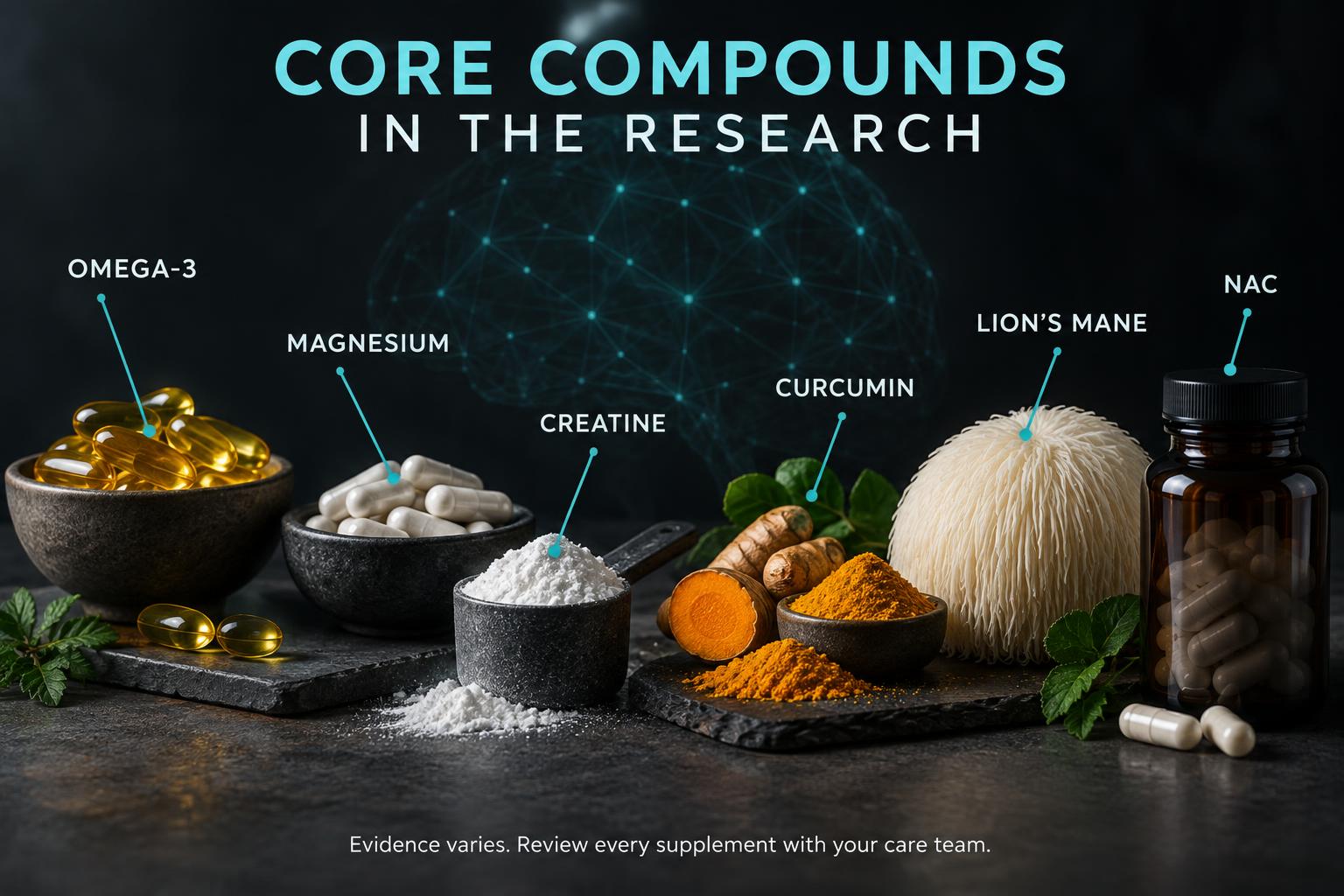
Research supports several natural compounds for TBI recovery, including omega-3 fatty acids (fish oil), magnesium (especially the threonate form), creatine, curcumin, Lion's Mane mushroom, N-acetyl cysteine (NAC), and vitamin D. These compounds target the biological processes brain injury disrupts — neuroinflammation, oxidative stress, and impaired cellular energy production — and may support the brain's natural healing process. They work best as part of a broader recovery plan and should be discussed with a healthcare provider familiar with TBI. This guide breaks down the science, dosages, and forms behind each one.
Brain injuries don't end when you leave the hospital. For millions of TBI survivors, the real battle begins in the weeks, months, and years that follow — navigating fatigue, cognitive fog, mood dysregulation, headaches, and a recovery system that rarely offers enough answers. Increasingly, survivors, caregivers, and forward-thinking clinicians are turning to natural supplements and evidence-informed biohacking strategies to support the brain's healing process.
This guide is not medical advice. Always consult a qualified healthcare provider — ideally one familiar with TBI — before starting any supplement regimen. What it is is a thorough, honest look at the most researched natural compounds being used by the TBI community today, the science behind them, and how they may fit into a comprehensive recovery strategy.
Understanding the Post-TBI Brain
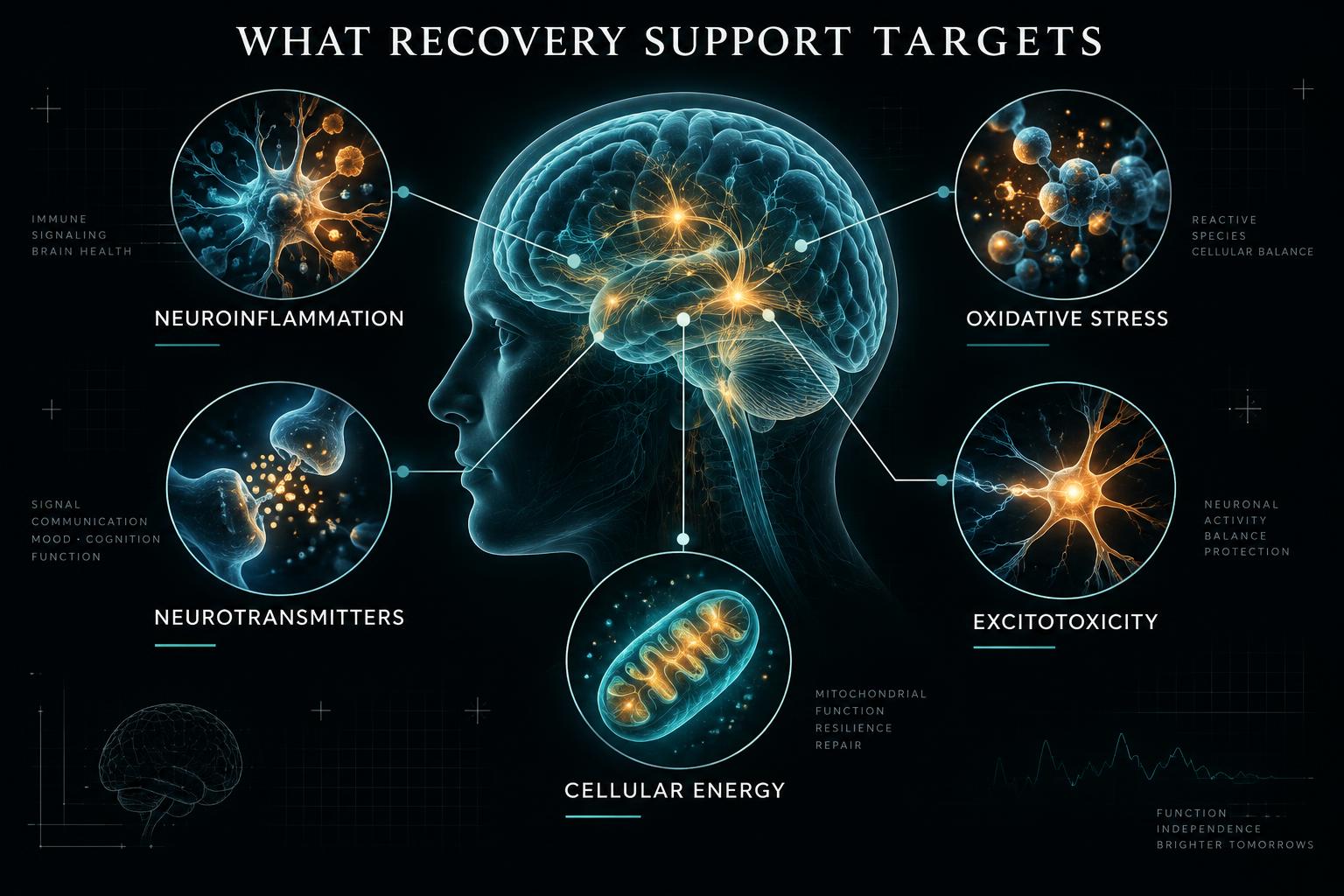
To understand why certain supplements may help, it helps to know what's happening inside a brain after injury. A traumatic brain injury triggers a cascade of damaging biological processes:
Neuroinflammation — an immune response that, if prolonged, damages healthy tissue
Oxidative stress — an overproduction of harmful free radicals that injure cells
Excitotoxicity — excessive release of glutamate that overstimulates and kills neurons
Mitochondrial dysfunction — impaired cellular energy production
Disrupted neurotransmitter signaling — altered levels of dopamine, serotonin, GABA, and acetylcholine
Many of the natural compounds below work by targeting one or more of these mechanisms. This is the foundation of what TBI-oriented biohacking is really about: reducing the biological damage, supporting cellular repair, and creating the best possible environment for neuroplasticity — the brain's ability to rewire and heal.
The Core Supplements: What Research Supports
Omega-3 Fatty Acids (Fish Oil)
Why it matters: Omega-3s — particularly DHA (docosahexaenoic acid) and EPA (eicosapentaenoic acid) — are the building blocks of brain cell membranes. After TBI, the brain's DHA content drops significantly, and neuroinflammation surges. Replenishing omega-3s addresses both issues simultaneously.
The science: Animal studies have consistently shown that omega-3 supplementation after TBI reduces brain lesion size, decreases inflammatory markers, and improves cognitive outcomes. Human studies are still catching up, but clinical evidence supports omega-3s for reducing neuroinflammation, improving mood and depression (common post-TBI), and supporting overall brain health.
Researcher Michael Lewis, M.D. — a former U.S. Army colonel and pioneer in military TBI treatment — has documented cases using very high-dose fish oil (up to 15–20g/day of combined EPA+DHA) in severe TBI recovery with remarkable results. While mega-dosing should only be done under medical supervision, even moderate doses (2–4g/day of EPA+DHA) appear beneficial.
What to look for: High-quality, third-party tested fish oil with a high combined EPA+DHA content. Triglyceride form is more bioavailable than ethyl ester form. Algae-based omega-3s are a vegan alternative that provides DHA directly.
Typical dosage: 2–4g combined EPA+DHA daily for general support; higher doses should be supervised.
Green Tea Extract (EGCG)
Why it matters: Green tea extract — particularly its primary active compound epigallocatechin gallate (EGCG) — is one of the most potent neuroprotective antioxidants studied in TBI research. It crosses the blood-brain barrier and works directly where the damage occurs.
The science: EGCG has been shown in preclinical studies to reduce oxidative stress, decrease neuroinflammation, inhibit apoptosis (programmed cell death) of neurons, and support the clearance of damaged proteins. It also activates Nrf2, a master regulator of the body's own antioxidant defense system.
Research has also shown EGCG may support the production of BDNF (brain-derived neurotrophic factor) — essentially a fertilizer for the growth and maintenance of neurons. Low BDNF is common in TBI survivors and is associated with depression, cognitive impairment, and poor neuroplasticity.
What to look for: Standardized green tea extract with at least 45–50% EGCG content. Can also be consumed as quality whole-leaf green tea, though supplement form provides more concentrated EGCG. Take with food to reduce potential stomach irritation.
Caution: High doses of EGCG may affect liver enzymes in sensitive individuals. Stick to recommended doses and avoid stacking multiple EGCG sources.
Typical dosage: 400–800mg of standardized green tea extract (providing ~200–400mg EGCG) daily.
Magnesium
Why it matters: Magnesium may be the single most important mineral for TBI recovery, and most TBI survivors are deficient in it. Immediately after a brain injury, magnesium levels in brain tissue plummet — and they may stay low for days to weeks. This drop contributes directly to excitotoxicity, cellular death, and poor recovery outcomes.
The science: Magnesium acts as a natural NMDA receptor antagonist — it essentially blocks the "overactivation" channel through which excitotoxic damage occurs. It also supports mitochondrial function, regulates calcium flow (calcium overload kills neurons), reduces inflammation, and is necessary for the synthesis of hundreds of enzymes involved in cellular repair.
Animal studies that administered magnesium after TBI showed significantly better neurological outcomes. Human trials have been more mixed, largely due to challenges with delivery and timing — but the foundational science is strong. Magnesium is also widely recognized for reducing headache frequency and improving sleep quality, two major quality-of-life issues for TBI survivors.
Form matters enormously:
Magnesium glycinate — highly bioavailable, calming, ideal for sleep support
Magnesium threonate (L-threonate) — specifically developed to cross the blood-brain barrier; the most studied form for cognitive and TBI applications
Magnesium malate — good for energy support and muscle function
Avoid magnesium oxide — very poor absorption
Typical dosage: 300–500mg elemental magnesium daily, ideally split into morning and evening doses. Magnesium threonate is typically dosed at 1,500–2,000mg of the compound (providing ~140mg elemental magnesium).
Creatine
Why it matters: Most people know creatine as a muscle-building supplement. What fewer people know is that it may be one of the most powerful neuroprotective compounds available without a prescription.
The science: The brain is an enormous energy consumer. After TBI, the brain enters an energy crisis — mitochondria are damaged, ATP (cellular fuel) production drops, and the brain's demand for energy far exceeds supply. Creatine directly replenishes the phosphocreatine pool that cells use to regenerate ATP rapidly. This is particularly critical in the post-injury period.
Preclinical studies have shown creatine reduces mitochondrial damage, decreases markers of oxidative stress, and reduces both contusion volume and cognitive deficits after TBI. A notable study in children with TBI found that creatine supplementation significantly reduced hospitalization duration, post-traumatic amnesia, and disability scores compared to controls.
Beyond the acute phase, creatine supports ongoing mitochondrial health, may reduce depression (creatine is being studied as an augmentation strategy for treatment-resistant depression), and supports overall cognitive function and brain fog — all common TBI challenges.
What to look for: Creatine monohydrate remains the gold standard — it is the most studied, most affordable, and most effective form. There is no compelling evidence that "fancy" forms like creatine HCl or buffered creatine are superior for brain applications.
Typical dosage: 3–5g daily, no loading phase needed for general use. Some TBI-focused practitioners use higher doses (5–10g/day) under supervision.
Curcumin (Turmeric Extract)
Why it matters: Curcumin, the active compound in turmeric, has been called a "poly-pharmacological" agent — it targets multiple TBI pathways simultaneously, including neuroinflammation, oxidative stress, and neurotrophic support.
The science: Curcumin is a potent inhibitor of NF-κB, one of the primary transcription factors driving neuroinflammation after TBI. Animal studies have shown curcumin supplementation after TBI reduces brain edema, decreases inflammatory cytokines, improves cognitive performance, and supports BDNF levels.
The big challenge with curcumin is bioavailability — standard turmeric powder is poorly absorbed. This is why supplement form matters.
Forms with enhanced bioavailability:
Longvida — lipid-encapsulated form; excellent brain penetration, well studied for cognitive applications
Theracurmin — water-dispersible form with high absorption
BCM-95 (Biocumin) — combined with turmeric essential oils; 6–7x more bioavailable than standard curcumin
Always pair with black pepper (piperine) if using standard curcumin — piperine increases absorption by up to 2,000%
Typical dosage: Varies by form. 500–2,000mg of a high-bioavailability form daily.
Lion's Mane Mushroom
Why it matters: Lion's Mane (Hericium erinaceus) is the only known natural compound that stimulates the synthesis of Nerve Growth Factor (NGF) — a protein essential for the survival, growth, and maintenance of neurons.
The science: Lion's Mane contains unique compounds — hericenones and erinacines — that cross the blood-brain barrier and upregulate NGF production. This makes it particularly interesting for TBI, where neuronal damage and impaired repair are central problems.
Animal studies have shown Lion's Mane improves cognitive recovery after TBI, supports remyelination (repair of the protective sheath around nerve fibers), reduces neuroinflammation, and promotes neurogenesis in the hippocampus — the brain's memory center.
Human studies are limited but promising, particularly for mild cognitive impairment and mood support. Anecdotally, many TBI survivors report Lion's Mane as one of the most impactful supplements for cognitive clarity and brain fog.
What to look for: Look for products using the fruiting body (not just mycelium on grain), with verified beta-glucan and hericenone content. Hot water extraction is needed to access the bioactive compounds.
Typical dosage: 500–1,500mg of dual-extract (water and alcohol extracted) fruiting body powder, 1–2x daily.
N-Acetyl Cysteine (NAC)
Why it matters: NAC is a precursor to glutathione — the brain's primary antioxidant. After TBI, glutathione levels drop sharply, leaving the brain exposed to oxidative damage. NAC replenishes this critical defense system.
The science: NAC has been studied extensively in TBI research. It reduces oxidative stress markers, protects mitochondria, has anti-inflammatory effects, and may help modulate glutamate — the excitatory neurotransmitter responsible for excitotoxic damage. A notable military study (the MIDAS trial) found that NAC given after blast TBI significantly improved resolution of symptoms including memory problems, sleep disturbances, and dizziness.
NAC also has emerging evidence for reducing symptoms of depression and anxiety — both of which are extremely common after TBI — and may help with the obsessive-compulsive thought patterns some survivors experience.
Typical dosage: 600–1,800mg daily, often split into 2 doses. Higher doses (2,400–3,600mg) have been studied in acute settings under medical supervision.
Vitamin D
Why it matters: Vitamin D deficiency is rampant in the general population and even more common in TBI survivors. Low vitamin D is associated with worse TBI outcomes, increased neuroinflammation, and higher rates of depression.
The science: Vitamin D is not just a vitamin — it's a neuroactive steroid hormone with receptors throughout the brain. It regulates neuroinflammation, supports neuroplasticity, promotes neuronal survival, and modulates immune function. Several studies have found that Vitamin D deficiency at the time of TBI predicts worse functional outcomes. Supplementation may support overall brain health, mood regulation, and immune balance in recovery.
Note: Get your levels tested (25-OH Vitamin D blood test) before supplementing aggressively. Target range for TBI recovery is often considered 50–80 ng/mL.
Typical dosage: 2,000–5,000 IU daily, ideally with Vitamin K2 (MK-7 form) to support proper calcium metabolism. Dose to your blood levels under practitioner guidance.
Phosphatidylserine (PS)
Why it matters: Phosphatidylserine is a phospholipid that makes up a significant portion of brain cell membranes. It plays a critical role in neuronal communication, glucose metabolism in the brain, and the synthesis of neurotransmitters.
The science: PS is one of the few supplements to have received a "qualified health claim" from the FDA for cognitive function. Studies show it can improve memory, attention, and processing speed. In TBI contexts, it supports neuronal membrane repair and integrity — the literal rebuilding of damaged brain cells. It may also help regulate cortisol, which is frequently dysregulated after TBI, contributing to hypervigilance, poor sleep, and emotional instability.
What to look for: Sunflower-derived or soy-derived PS (soy-free options are available). Look for 100% PS content, not a blend.
Typical dosage: 100–300mg daily, often taken in divided doses.
Beyond Supplements: The Biohacking Framework
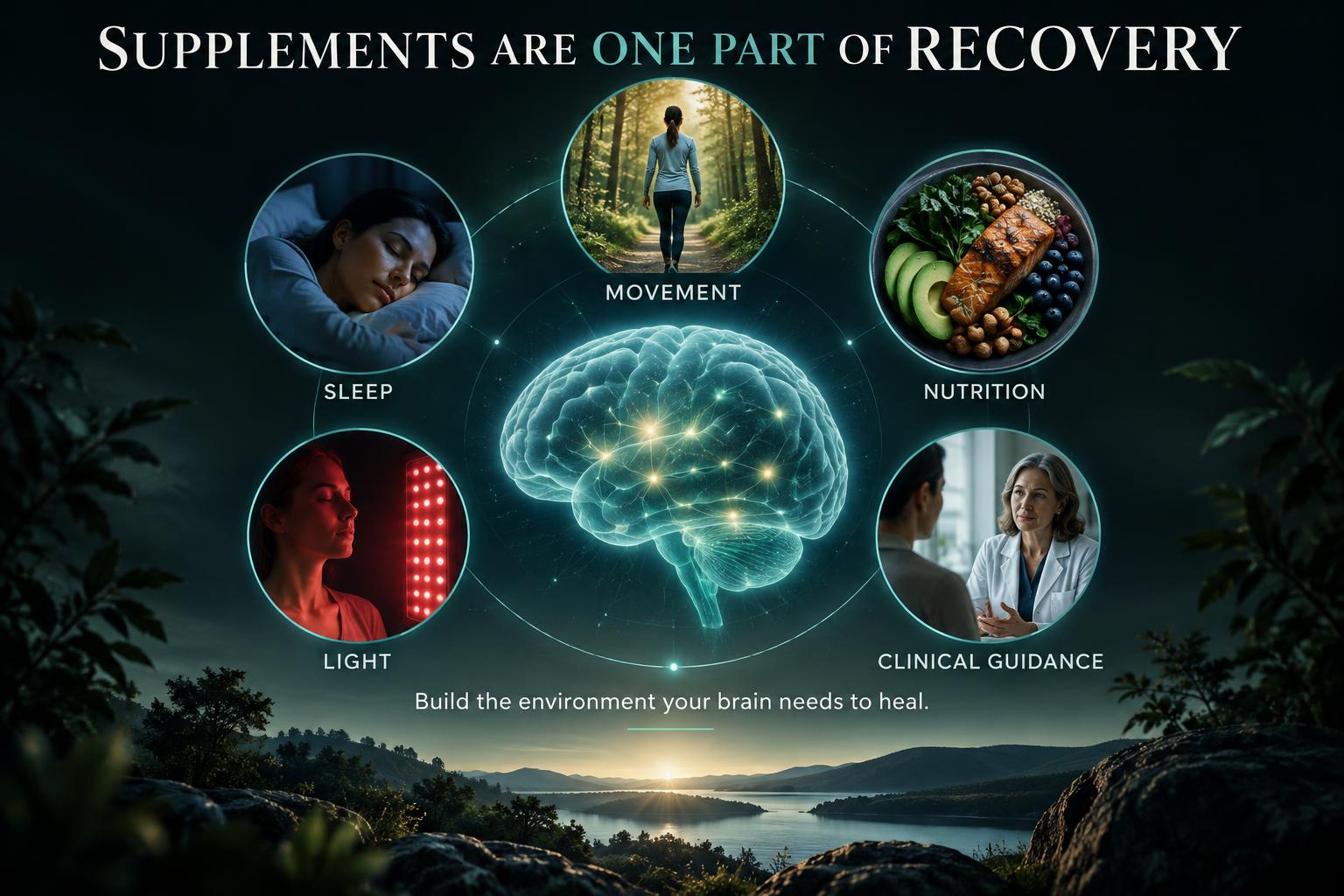
Supplements work best as part of a broader lifestyle and biohacking strategy. Here are additional evidence-supported approaches that TBI survivors and practitioners are integrating:
Sleep Optimization
Sleep is not passive recovery — it's when the brain's glymphatic system activates to clear toxic waste products, including those that accumulate after TBI. Prioritizing 7–9 hours of quality sleep is arguably the single most important recovery intervention. Magnesium glycinate, melatonin (0.5–3mg), and dark/cool sleeping environments support this process.
Zone 2 Cardiovascular Exercise
Moderate-intensity aerobic exercise — the kind where you can hold a conversation — is one of the most powerful BDNF-stimulating activities available. Even 20–30 minutes of walking most days can meaningfully support neuroplasticity and mood. Start gently and increase gradually; exertion intolerance is common post-TBI.
Cold Exposure (Cold Showers / Cold Plunge)
Emerging research on cold thermogenesis shows it activates norepinephrine release (up to 300%), reduces neuroinflammation, and stimulates cellular cleanup pathways (autophagy). Many TBI survivors report improved mental clarity and reduced brain fog from regular cold exposure. Begin conservatively — 30–60 second cold showers — and scale up.
Important caution for TBI survivors: check with your provider before starting cold exposure. Autonomic dysregulation (dysautonomia) is common after a brain injury, and the sharp sympathetic surge from cold plunging can trigger dizziness, blood pressure swings, heart rate irregularity, headache, or symptom flare-ups. Anyone with cardiovascular conditions, seizure history, or unresolved post-concussion symptom sensitivity should get individualized clearance first, and no one should cold plunge alone.
Intermittent Fasting & Ketogenic Nutrition
The ketogenic diet was originally developed as a neurological therapy for epilepsy. In TBI contexts, it provides the brain with ketones — an alternative fuel source that bypasses the mitochondrial dysfunction that impairs glucose metabolism after injury. Even a moderate low-carbohydrate diet or intermittent fasting (16:8 window) may improve cognitive clarity and reduce neuroinflammation. Work with a practitioner familiar with TBI before making significant dietary changes.
Photobiomodulation (Red Light / Near-Infrared Light Therapy)
Transcranial photobiomodulation — using red and near-infrared light to stimulate mitochondrial function — is an emerging and increasingly promising area of TBI research. Studies have shown improvements in cognitive function, sleep, and mood in both acute and chronic TBI. Devices range from consumer-grade red light panels to dedicated transcranial devices.
Other Recovery Toolbox Therapies
Supplements and lifestyle work sit alongside the clinical therapies many TBI survivors build into their recovery toolbox. Two of the most discussed are hyperbaric oxygen therapy for brain injury, which floods injured tissue with oxygen under pressure, and neurofeedback for TBI survivors, which trains dysregulated brainwave patterns toward healthier states. Several of the compounds above also appear in condensed form in our free concussion and TBI recovery guides.
Building Your Stack: Key Principles
Start low and slow. Introduce one supplement at a time so you can assess what's working and catch any sensitivities. Give each supplement 4–6 weeks before evaluating effect.
Quality over quantity. Third-party testing (NSF, USP, Informed Sport, or COA from an independent lab) matters enormously. The supplement industry is poorly regulated, and label accuracy varies widely.
Synergistic combinations. Some of these compounds work well together — fish oil + curcumin for neuroinflammation, creatine + magnesium for energy and neuroprotection, NAC + Vitamin C for antioxidant support. Others may have overlapping mechanisms that require dose adjustments.
Track your baseline and progress. Use simple tools — a symptom journal, cognitive apps like Cambridge Brain Sciences or BrainHQ — to measure your starting point and track progress objectively.
Work with a practitioner. Functional medicine physicians, integrative neurologists, and naturopathic doctors familiar with TBI can run relevant labs (inflammatory markers, nutrient levels, hormones) and personalize your protocol. The Foundation's Financial Assistance Program can help TBI survivors access these practitioners.
A Note on Hope and Realism
There is no supplement that erases a brain injury. Recovery is non-linear, deeply individual, and often frustratingly slow. What natural compounds and biohacking strategies can do is optimize the biological environment in which recovery happens — reducing unnecessary damage, supporting cellular repair, and giving the brain the raw materials it needs to heal as fully as possible.
The TBI survivors who tend to see the best outcomes combine multiple approaches: specialized medical care, neurological rehabilitation, mental health support, community connection, and informed lifestyle and supplementation strategies. No single intervention is the answer, but together, they can make a meaningful difference.
Strength In Pain Foundation is committed to making these resources accessible to every TBI survivor, regardless of financial circumstance. If you or a loved one needs support accessing specialized TBI treatments, explore our Financial Assistance Program or reach out to our team directly.
FAQ: Supplements for Brain Injury Recovery
What supplements help with TBI recovery?
The most researched options are omega-3 fatty acids (EPA/DHA), magnesium (especially L-threonate), creatine monohydrate, curcumin, N-acetyl cysteine (NAC), Lion's Mane, vitamin D, green tea extract (EGCG), and phosphatidylserine. They target the core post-TBI problems — neuroinflammation, oxidative stress, excitotoxicity, and mitochondrial dysfunction. None replace medical care, and all should be reviewed with a provider familiar with brain injury.
Does creatine help brain injury?
The evidence is encouraging. Creatine replenishes the phosphocreatine pool the brain uses to regenerate ATP, which matters because the brain enters an energy crisis after injury. Preclinical work shows reduced mitochondrial damage and smaller contusion volumes, and a study in children with TBI found creatine supplementation reduced hospitalization duration, post-traumatic amnesia, and disability scores. Creatine monohydrate at 3–5g daily is the standard, well-studied form.
Is magnesium good for concussion recovery?
Magnesium levels in brain tissue drop sharply after a concussion and can stay low for days to weeks, which contributes to excitotoxic damage. Magnesium acts as a natural NMDA receptor antagonist, supports mitochondrial function, and is widely used to reduce headache frequency and improve sleep — two of the biggest quality-of-life issues after concussion. Magnesium threonate is the form best studied for crossing the blood-brain barrier; magnesium oxide is poorly absorbed.
How long does it take to notice a difference from TBI supplements?
Give each supplement 4–6 weeks before evaluating it, and introduce one at a time so you can tell what is actually working. Sleep and headache changes from magnesium often show up fastest; membrane- and neurotrophic-driven changes from omega-3s, Lion's Mane, or phosphatidylserine typically take longer.
Are supplements enough on their own to recover from a brain injury?
No. No supplement erases a brain injury. Survivors who do best combine specialized medical care, neurological rehabilitation, mental health support, community, and lifestyle strategies. Supplements optimize the biological environment in which recovery happens — they are one input, not the plan.
Should I take these supplements at the same time as therapies like HBOT or neurofeedback?
Many survivors do, and the mechanisms are complementary — supplements support the cellular repair environment while therapies like hyperbaric oxygen therapy and neurofeedback drive oxygenation and neuroplasticity. Coordinate the full protocol with one practitioner so nothing conflicts and progress can actually be attributed.
Resources & Further Reading
Omega-3 and TBI: Lewis MD. "Concussions, Traumatic Brain Injury, and the Innovative Use of Omega-3s." J Am Coll Nutr. 2016.
Creatine and TBI: Sakellaris G et al. "Prevention of traumatic headache, dizziness and fatigue with creatine administration." Acta Paediatrica. 2008.
NAC (MIDAS Trial): Hoffer ME et al. "Amelioration of acute sequelae of blast induced mild traumatic brain injury by N-acetyl cysteine." PLOS ONE. 2013.
Magnesium and TBI: Vink R et al. "Magnesium in acute and chronic brain injury: an update." Magnesium Research. 2009.
Lion's Mane and NGF: Kawagishi H, Zhuang C. "Compounds for dementia from Hericium erinaceum." Drugs Fut. 2008.
Curcumin and TBI: Wu A et al. "Dietary curcumin counteracts the outcome of traumatic brain injury on oxidative stress, synaptic plasticity, and cognition." Exp Neurol. 2006.
The information in this article is for educational purposes only and does not constitute medical advice. Always consult a qualified healthcare provider before beginning any supplement or treatment protocol.