"You Don't Have a Brain Injury": When TBI Misdiagnosis Delays the Care You Actually Need
Reviewed for accuracy by Strength in Pain Foundation team. This article is educational and is not medical advice.
Can you have a traumatic brain injury even if a doctor told you that you didn't?
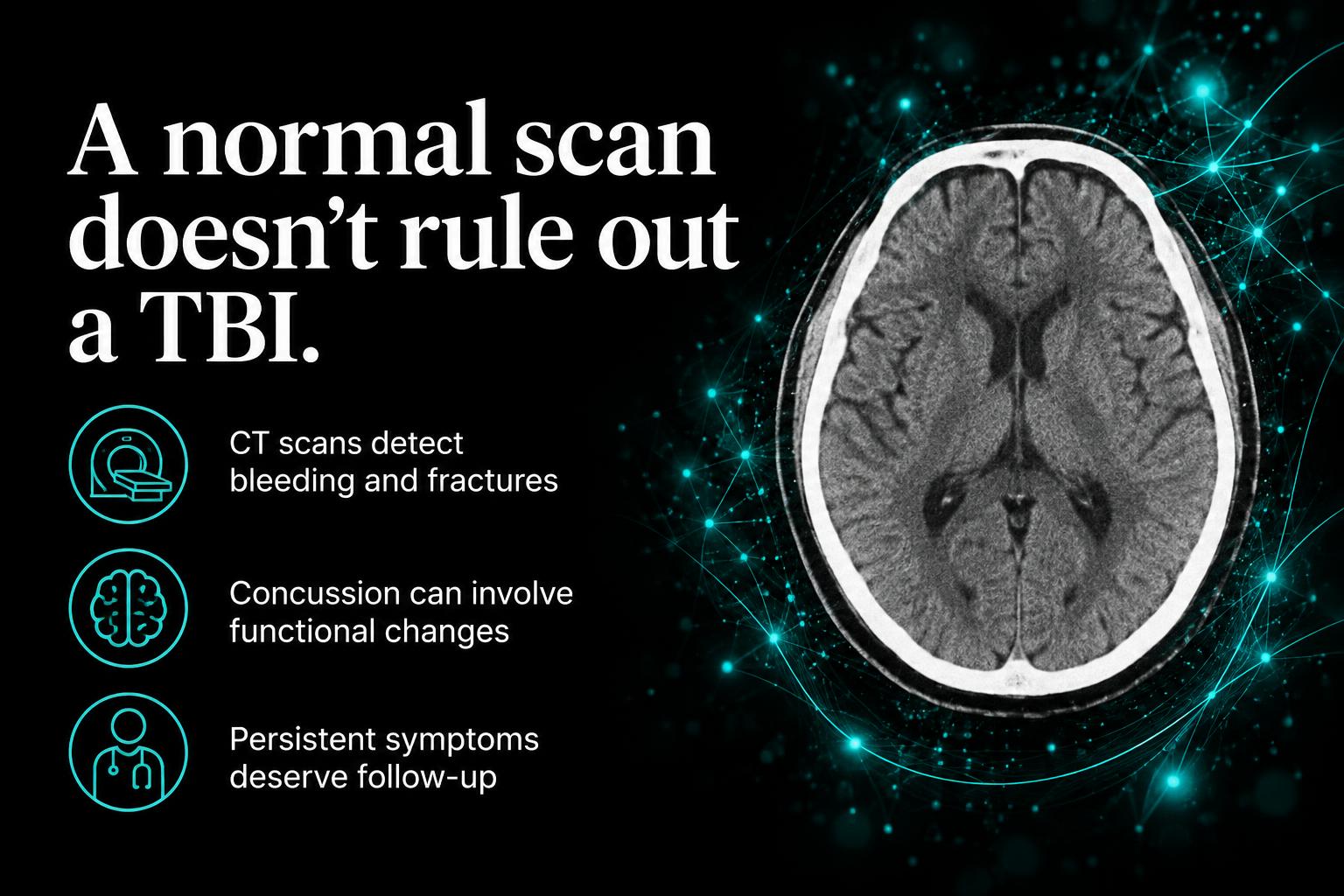
Yes. A normal CT scan or a "you're fine, just a bump on the head" from the ER does not rule out a traumatic brain injury (TBI). CT scans are built to catch bleeding, skull fractures, and swelling — not the microscopic, functional changes that cause mild TBI and concussion symptoms. Studies have found that more than half of TBIs are missed at the point of first contact, which means a huge number of survivors are sent home with instructions to rest and no explanation for why their brain still doesn't feel right weeks later.
If that sounds familiar, you're not imagining it, and you're not alone.
Why Mild TBIs Slip Through the Cracks
At Strength In Pain Foundation, this story comes up constantly. Someone hits their head — in a car accident, a fall, a surf wipeout, a sports collision — goes to the emergency room, and is told they're okay. No fracture, no bleed, no admission. Weeks later they're dealing with headaches, brain fog, memory lapses, light sensitivity, irritability, or trouble sleeping, and no one has connected the dots back to that day.
There are real reasons this keeps happening:
The Glasgow Coma Scale (GCS) misses mild injuries. ER teams commonly use the GCS to triage head trauma, but it was designed to flag severe impairment, not the subtler, functional damage typical of a mild traumatic brain injury.
A negative CT scan gets treated as a clean bill of health. Imaging is excellent at spotting structural damage like hemorrhage or skull fracture. It is not designed to detect the diffuse axonal changes that cause concussion symptoms, so a "normal scan" often gets miscommunicated as "no brain injury."
Symptoms are frequently delayed. Post-concussion symptoms can take hours or days to fully surface, well after a patient has already been discharged from the ER with a clean bill of health.
Mechanism of injury shapes how seriously it's taken. Research shows TBIs from motor vehicle accidents get caught more often than TBIs from falls, in part because falls simply don't trigger the same level of suspicion from treating physicians — even though the resulting brain injury can be just as real.
How Often Does This Actually Happen?
The numbers are hard to sit with. A widely cited University of Washington study found a 56% misdiagnosis rate for TBI in the emergency room setting, and some later research puts the miss rate for hospital ERs as high as 80%. A separate study published in BMJ Open found that only about 23% of emergency department patients who met criteria for mild TBI had that diagnosis clearly documented in their medical notes. Fall-related TBIs are misdiagnosed at especially high rates — some data points to roughly 75% — while even TBIs from car crashes, which tend to raise more clinical suspicion, are still missed over 40% of the time.
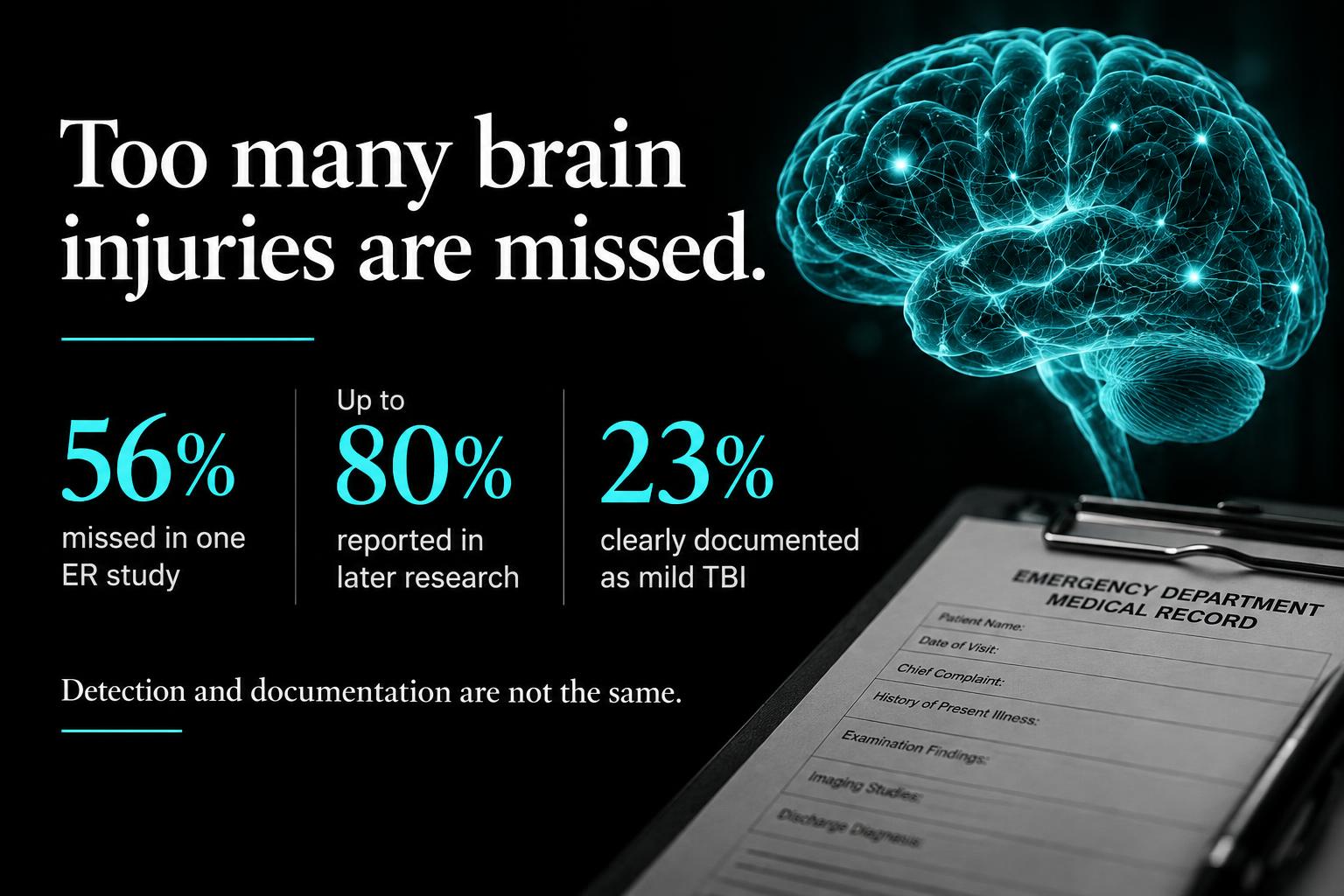
In plain terms: if you left the ER after a head injury without a TBI diagnosis, statistically, you had a real chance of being one of the people whose injury simply wasn't caught.
Why This Matters Beyond the Paperwork
A missed diagnosis isn't just a labeling issue. It affects everything downstream:
No treatment plan. Without a documented TBI, there's no referral to neurology, no cognitive rehab, no concussion protocol, and no follow-up imaging or evaluation schedule.
No accommodations. Employers, schools, and insurers often require documentation before they'll approve modified duties, medical leave, or coverage for therapies like neurofeedback, HBOT, or vestibular rehab.
Higher risk of re-injury. Without a diagnosis, survivors are more likely to return to work, driving, or sports before the brain has actually healed — raising the risk of second impact syndrome and prolonged post-concussion syndrome.
Self-doubt and isolation. Being told "you're fine" while still struggling cognitively and emotionally leads many survivors to question their own experience, which delays them seeking further care altogether.
This is exactly the gap Strength In Pain Foundation was built to close — connecting brain injury survivors with real information, financial assistance for non-covered treatments, and a community that believes them.
How to Advocate for Yourself After a Head Injury
If you were told your head injury wasn't a TBI but you're still not feeling like yourself, here's where to start:
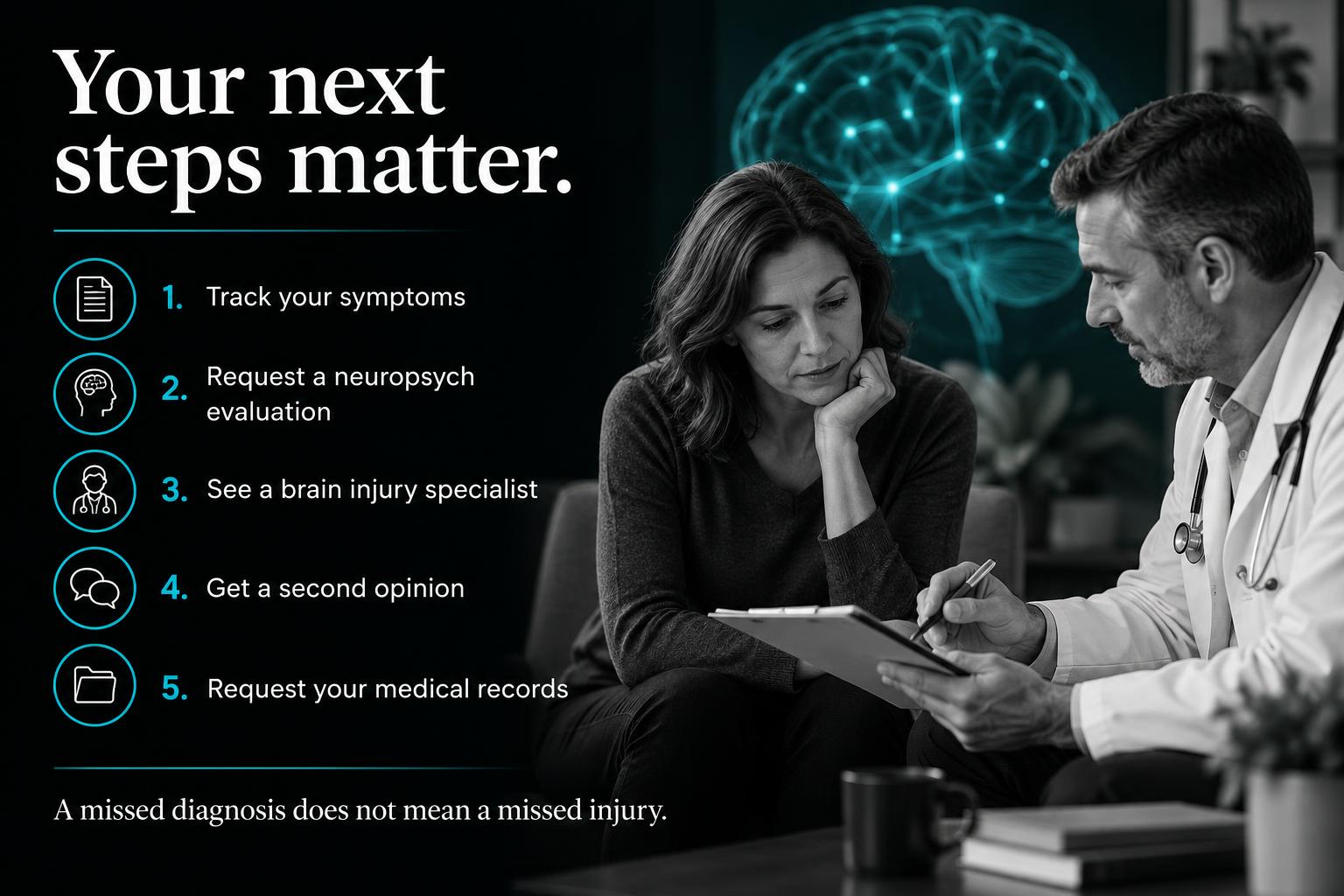
Track your symptoms in writing. Headaches, sleep changes, memory slips, mood shifts, sound or light sensitivity — write down when they started and how they've changed. A symptom log is one of the strongest tools you have for getting taken seriously at a follow-up visit.
Request a neuropsychological evaluation. This type of testing is designed specifically to detect the cognitive effects of mild TBI that a CT scan cannot show.
Ask directly for a concussion or TBI-specific follow-up, ideally with a neurologist or a brain injury specialist rather than a general practitioner alone.
Get a second opinion if something feels off. You are allowed to return to care, even weeks or months later, and ask for your case to be reassessed in light of ongoing symptoms.
Request copies of your medical records, including the ER note. Knowing exactly what was and wasn't documented helps you and any future provider understand where the gaps are.
Connect with a TBI survivor community. Organizations like Strength In Pain Foundation exist because so many survivors go through exactly this. You don't have to figure out the medical system or the recovery process alone.
A brain injury doesn't stop being real just because it wasn't caught on day one. Trust what your body and mind are telling you, and keep pushing for the evaluation you deserve.
FAQ: TBI Misdiagnosis
Can a normal CT scan rule out a traumatic brain injury?
No. CT scans detect structural damage like bleeding or fractures, but most mild TBIs and concussions don't show up on imaging at all.
How common is TBI misdiagnosis in the ER?
Very common. Research points to misdiagnosis rates ranging from roughly 56% up to 80% in some emergency department settings, depending on the study and the mechanism of injury.
Why are TBIs from falls missed more often than TBIs from car accidents?
Falls tend to raise less clinical suspicion than high-impact events like car crashes, so providers are statistically less likely to screen carefully for TBI, even though the injury can be just as significant.
What should I do if I think I have an undiagnosed TBI?
Start a symptom log, request a neuropsychological evaluation, seek a follow-up with a neurologist or brain injury specialist, and don't hesitate to get a second opinion.
Is it too late to get diagnosed if my injury happened months ago?
No. TBI symptoms and their effects on daily life can be evaluated and documented at any point, even long after the initial injury.
Strength In Pain Foundation supports TBI survivors through education, advocacy, and financial assistance for treatments not covered by insurance. If you're navigating a brain injury that wasn't caught the first time, you're exactly who this community was built for.