Why Your Loved One Seems Like a Different Person After a Brain Injury (and How to Support Them Without Losing Yourself)
Reviewed for accuracy by Strength in Pain Foundation team. This article is for educational purposes only and is not a substitute for professional medical advice, diagnosis, or treatment.
Why Does Your Loved One Seem Like a Different Person After a Brain Injury?
Because, in a very real sense, the brain that produced their personality has been injured. Personality change after a traumatic brain injury (TBI) is not a character flaw, a choice, or a sign that they've stopped loving you. It is one of the most common and least discussed consequences of brain injury. In one longitudinal study of severe brain injury survivors and their significant others, 59.1% of patients showed measurable personality change, with the largest shifts in emotional stability, sociability, and self-discipline. A 2026 systematic review of 101 studies concluded that personality change is a common and persistent consequence of TBI, with irritability, emotional instability, anger outbursts, social withdrawal, and apathy among the most frequently reported changes.
If you're reading this because the person you live with, married, or raised seems unfamiliar since their injury, you are not imagining it, you are not overreacting, and you are not alone. This post is written for you: the spouse, parent, sibling, or friend who is trying to hold everything together while quietly wondering whether the person you knew is coming back.
What Is Actually Happening in the Brain
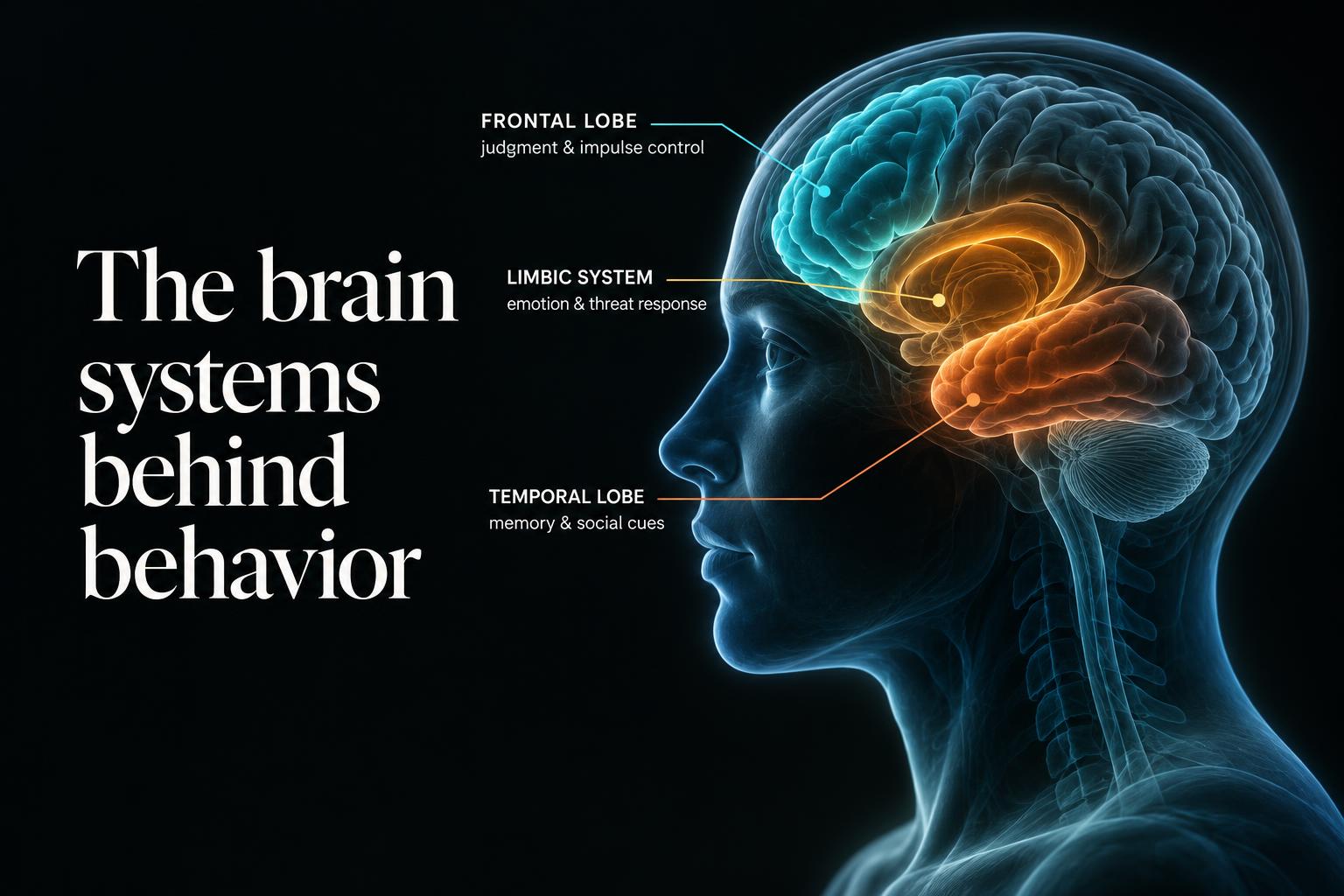
Personality isn't stored in one place, but a few regions do most of the work of regulating it. The frontal lobes, particularly the prefrontal cortex, handle impulse control, judgment, planning, and the ability to read a social situation and adjust. The temporal lobes and limbic structures manage emotional processing, memory, and threat response. These areas sit near the front and sides of the skull and are among the most frequently injured in falls, car accidents, sports collisions, and assaults, because the brain slides forward and strikes bone.
When these systems are damaged, the results show up as behavior. Someone who was patient becomes short-tempered. Someone who was outgoing goes quiet. Someone who was careful becomes impulsive. The same study of severe brain injury found that changes in emotional reactivity were most often seen in patients with frontal or temporal lesions, which lines up with what families describe.
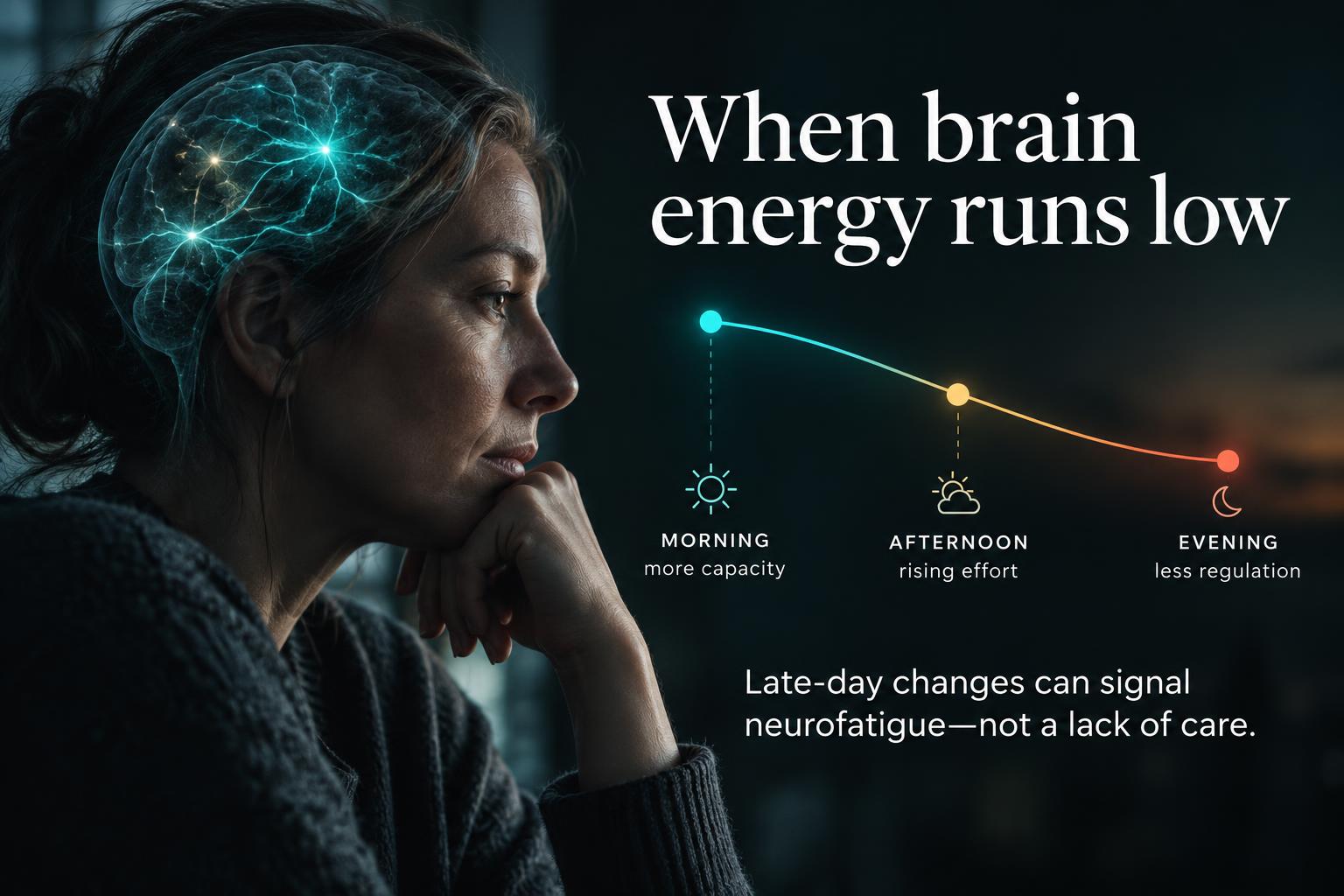
Layered on top of the direct injury is neurofatigue. A recovering brain uses far more energy to do ordinary tasks, so by mid-afternoon many survivors have nothing left for emotional regulation. What looks like a personality change at 4 p.m. may be a depleted brain that was managing fine at 9 a.m.
The Changes Families Report Most Often
Every injury is different, but the same patterns come up again and again in support groups, clinical literature, and our own conversations with families:
Irritability and anger. Small frustrations trigger outsized reactions. The anger often passes quickly, and the survivor may not understand why you're still upset ten minutes later.
Apathy and flat affect. Reduced initiative, less interest in activities they used to love, and a face that doesn't show much emotion. Families often mistake this for depression or laziness. It can be either, but it is frequently a direct result of frontal lobe injury.
Impulsivity and disinhibition. Saying things without filtering, spending money without thinking, interrupting, or making decisions the old version of them would never have made.
Emotional lability. Crying or laughing that comes on suddenly and seems disproportionate to the situation.
Self-centeredness or reduced empathy. Difficulty recognizing how their behavior affects others, not because they don't care but because the machinery that tracks other people's feelings is running slowly.
Rigidity. Trouble adapting when plans change; needing routines to function.
Reduced insight. Perhaps the hardest one: many survivors do not perceive the change in themselves. When you describe it, they may feel attacked.
Recognizing these as symptoms rather than choices doesn't make them easier to live with. But it changes the question from "why are they doing this to me?" to "what does their brain need right now?"
What's Temporary and What May Need Treatment
In the first weeks and months after injury, the brain is swollen, inflamed, and recalibrating. Much of the early behavioral change improves as that acute phase resolves. Sleep, reduced stimulation, and time do real work here.
Beyond that window, the picture is more mixed. The 2026 meta-analysis describes personality change as persistent for many survivors, and it highlights a lack of systematic research into treatment. That doesn't mean nothing helps. It means families often have to advocate for care that the standard discharge process doesn't offer.
Signs that a change is worth a deeper workup rather than waiting out:
Symptoms that plateau or worsen after the first three to six months.
Anger that has become frightening or unsafe for anyone in the home.
New depression, anxiety, or withdrawal that isn't lifting.
A survivor who was told their scans were "clear" but is clearly not functioning like themselves.
Many families are told that because a CT or MRI looked normal, the injury must be mild. Structural imaging shows bleeding and swelling; it does not show how the brain is functioning. Functional tools like SPECT imaging and qEEG can reveal patterns that standard scans miss, and treatments such as neurofeedback and hyperbaric oxygen therapy target the injured tissue directly rather than only managing symptoms. We've written about these in depth elsewhere on this site, and if the person you're caring for has been told everything looks fine while nothing feels fine, a functional workup is a reasonable next question to raise with their care team.
How to Respond in the Moment Without Escalating
You cannot argue someone out of a brain injury symptom. What you can do is lower the load on the system that's struggling.
Reduce, don't reason. When irritability spikes, more words make it worse. Lower your voice, shorten your sentences, and give the situation room. "Let's take a break and come back to this" works better than explaining why they're wrong.
Don't take the bait, and don't take it personally. This is easy to say and brutally hard to do. An outburst is usually a sign of an overloaded brain, not a verdict on you. Walking away for ten minutes is not losing; it's protecting both of you.
Protect the schedule. Fatigue drives most late-day blowups. Front-load demanding tasks and conversations. Build in rest before it's needed, not after.
Simplify the environment. Noise, crowds, screens, and multitasking all consume the same limited energy budget. A quieter home is not a luxury; it's a treatment.
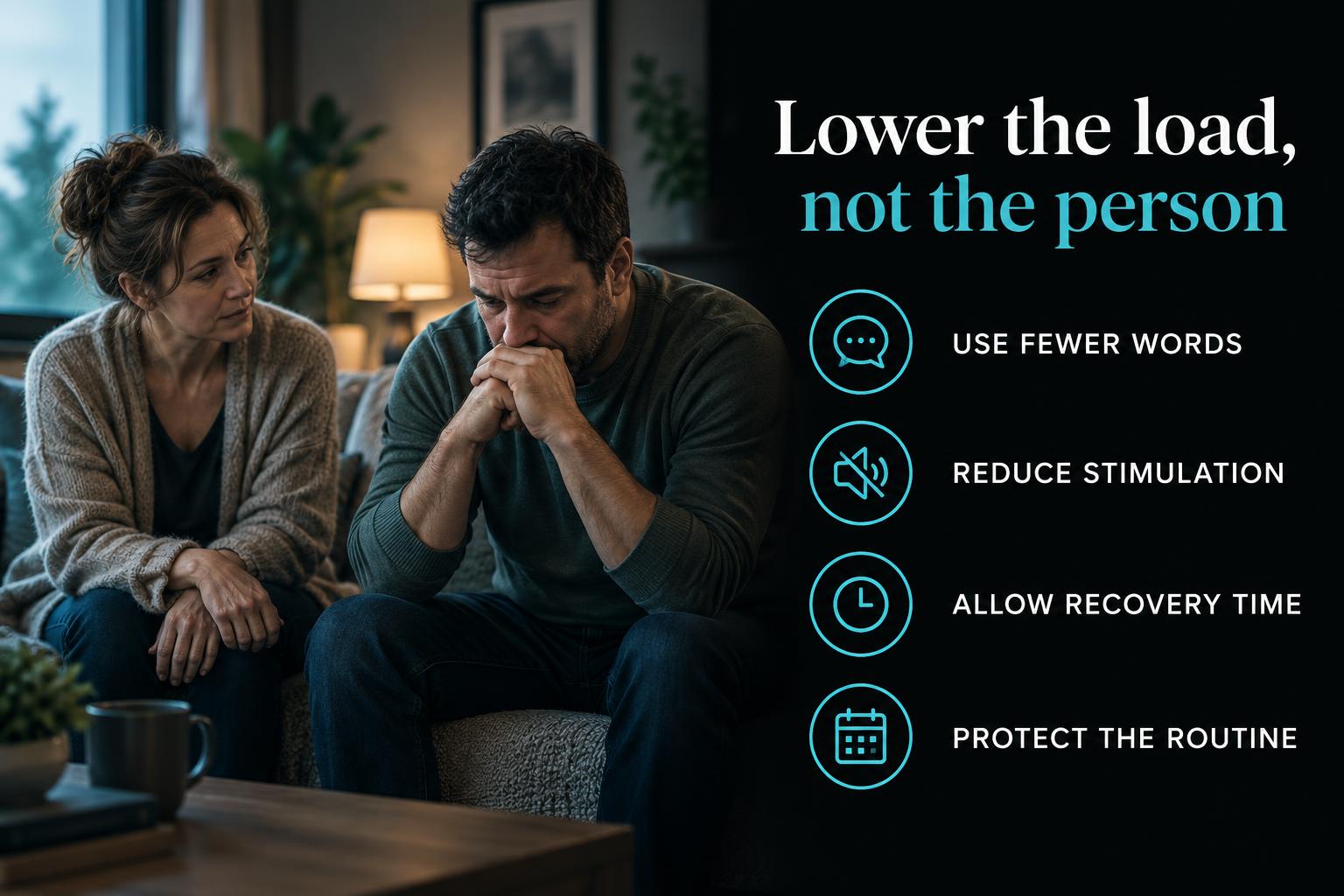
Externalize the structure. Lists, calendars, alarms, and written plans do the work that the frontal lobe used to do. This reduces the number of moments where they fail and you get frustrated.
Name the injury, not the person. "That's the injury talking" is a phrase many families use to separate the behavior from the relationship. It helps you stay on the same side.
Celebrate what's still there. Humor, kindness, a shared history: much of who they are survived. Noticing it out loud matters for both of you.
Caregiver Burnout Is Real, and It Is Not Selfish to Address It
Research on families living with TBI is sobering. In one study of community-based caregivers, 48.3% met the screening criteria for risk of depression, and the literature reports up to 50% prevalence of significant caregiver burden among those caring for severe TBI survivors. Research consistently finds that behavioral and personality changes, not physical disability, are the strongest drivers of caregiver distress.
Grief is a normal part of this. You are allowed to miss the person they were while loving the person they are. Both can be true at once, and pretending otherwise usually makes things worse.
Practical ways to protect yourself:
Set boundaries around unsafe behavior. Support does not mean absorbing verbal abuse or physical aggression. A boundary ("I'm leaving the room when you yell") is a form of care, not abandonment.
Get your own support. A therapist familiar with brain injury, a caregiver support group, or even one friend who understands the situation can carry more than you think.
Ask for respite. Family, friends, and local organizations can give you hours off. Take them without guilt.
Keep your own life. Exercise, work, hobbies, and relationships outside the house are what let you come back to this role with anything left to give.
Watch for your own warning signs. Persistent exhaustion, hopelessness, resentment that doesn't lift, or thoughts of walking away are signals to get help now, not later.
When to Push for a Workup, and How
If you've read this far and recognized your household, here is a reasonable path:
1. Document. Keep a simple log of behaviors, times of day, triggers, and how long episodes last. Patterns become obvious on paper.
2. Request a referral to a neuropsychologist or physiatrist (rehabilitation physician). These specialists understand behavioral change after TBI in a way most primary care physicians do not.
3. Ask specifically about functional imaging and neurofeedback. Use the words. Many providers won't raise these unless you do.
4. Bring your log and bring yourself. Survivors with reduced insight often under-report. Your observations are clinical data.
5. Ask about caregiver resources at the same appointment. You're part of the treatment plan whether or not anyone has said so.
Frequently Asked Questions
Is personality change after a brain injury permanent?
Not always. Early changes often improve as swelling and inflammation resolve. Some changes persist, particularly after moderate to severe injury, but persistence doesn't mean untreatable. Rehabilitation, functional treatments, and structured support can all improve outcomes, and research on the long-term course of personality change shows wide variation between individuals.
Can a mild concussion cause personality changes?
Yes. "Mild" describes the initial injury classification, not the severity of the effects. Irritability, emotional changes, and reduced tolerance for stress are common after concussion, and they can last months or longer when the injury is not properly treated.
Why doesn't my loved one see the change in themselves?
Reduced self-awareness, sometimes called anosognosia, is itself a symptom of frontal lobe injury. It is not denial in the ordinary sense. Approaching it with specific, non-judgmental examples usually works better than telling them they've changed.
Does personality change mean the injury was misdiagnosed or missed?
Sometimes. Many survivors are discharged with normal CT or MRI scans and told they're fine, then go on to experience months of behavioral and cognitive symptoms. Functional imaging like SPECT can reveal what structural scans don't, and it's worth asking about when symptoms persist.
How do I know if I'm burned out as a caregiver?
Persistent exhaustion, feeling hopeless or trapped, resentment that doesn't fade, withdrawing from your own relationships, and physical symptoms like poor sleep or frequent illness are common signs. Roughly half of TBI caregivers screen at risk for depression. If this sounds like you, getting support is not optional.
Can I apply for Foundation assistance on behalf of a family member?
Yes. Family members regularly reach out on behalf of survivors. Contact us and we'll walk you through the next steps.
Sources
1. Norup A, Mortensen EL. Prevalence and predictors of personality change after severe brain injury. Arch Phys Med Rehabil. 2015. https://pubmed.ncbi.nlm.nih.gov/25193491/
2. Personality change after traumatic brain injury: a systematic review and meta-analysis. J Neurol. 2026. https://pubmed.ncbi.nlm.nih.gov/42547613/
3. Wells R, Dywan J, Dumas J. Life satisfaction and distress in family caregivers as related to specific behavioural changes after traumatic brain injury. Brain Inj. 2005. https://pubmed.ncbi.nlm.nih.gov/16286324/
4. Predictors of caregiver depression among community-residing families living with traumatic brain injury. NeuroRehabilitation. 2007. https://pubmed.ncbi.nlm.nih.gov/17379944/
5. Cognitive, behavioral, and functional impairments among traumatic brain injury survivors: impact on caregiver burden. J Neurosci Rural Pract. 2022. https://ruralneuropractice.com/cognitive-behavioral-and-functional-impairments-among-traumatic-brain-injury-survivors-impact-on-caregiver-burden/
Strength In Pain Foundation supports TBI survivors and the families who care for them through education, advocacy, and financial assistance for treatments not covered by insurance. If you're holding a household together after someone's brain injury, you're exactly who this community was built for.