A Practical Guide to Recovery
Concussion Recovery Guide: Symptoms, Care & Recovery Steps
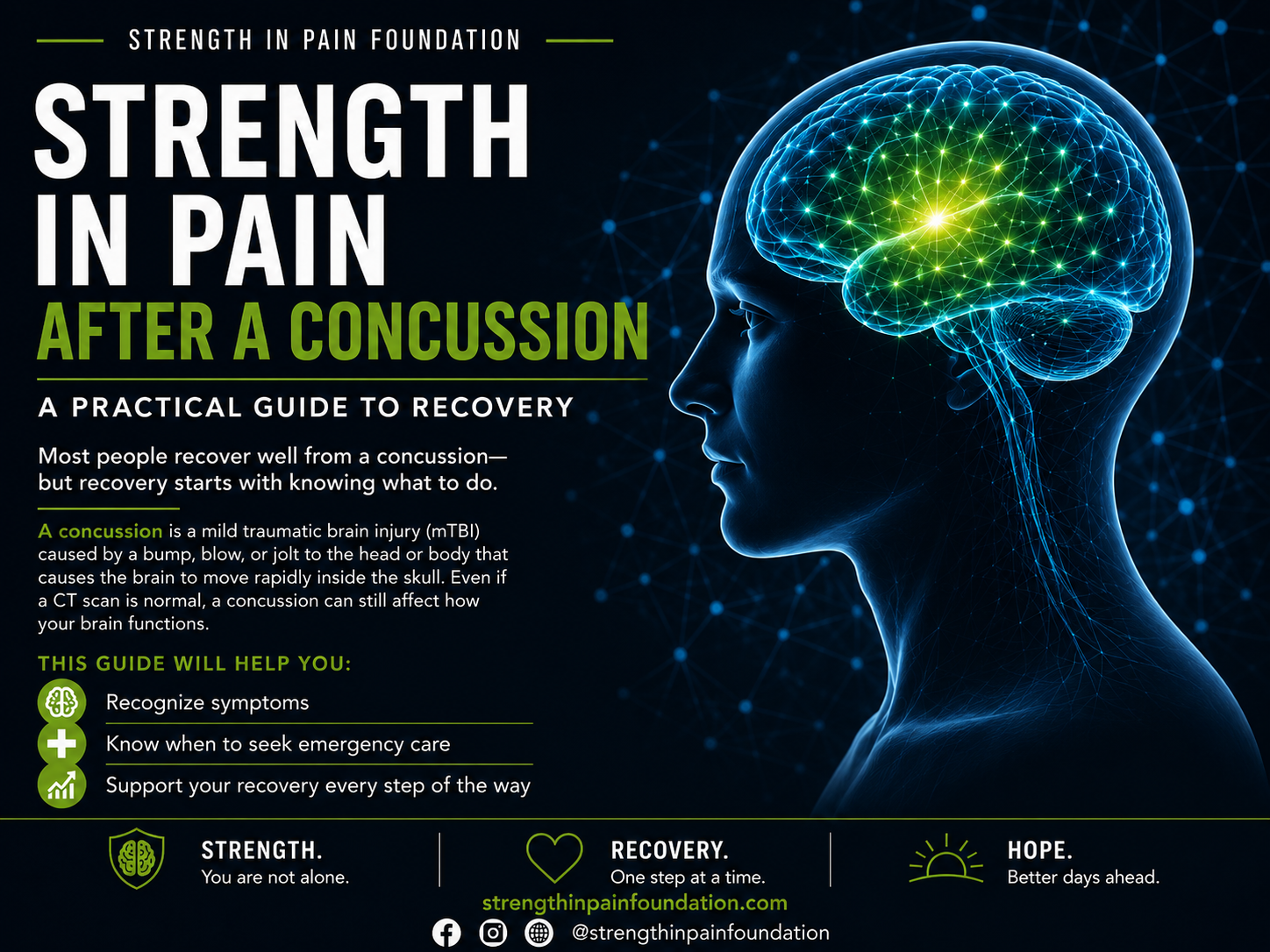
Most people recover well from a concussion — but recovery starts with knowing what to do. A concussion is a mild traumatic brain injury (mTBI) caused by a bump, blow, or jolt to the head or body that causes the brain to move rapidly inside the skull. Even if a CT scan is normal, a concussion can still affect how your brain functions.
This guide will help you recognize symptoms, know when to seek emergency care, and support your recovery every step of the way. Read it below, or download the printable PDF.
Common concussion symptoms
Symptoms may appear immediately or develop over the next several hours or days. Not everyone experiences all of these symptoms, and they vary in type, severity, and duration.
Physical
- Headache
- Pressure feeling inside the head
- Dizziness
- Nausea or vomiting
- Balance problems
- Sensitivity to light
- Sensitivity to noise
- Blurred or double vision
- Fatigue
Cognitive
- Brain fog
- Difficulty concentrating
- Memory problems
- Slower thinking
- Feeling mentally "off"
Emotional
- Irritability
- Anxiety
- Sadness
- Mood swings
- Increased frustration
Sleep
- Sleeping more than usual
- Trouble falling asleep
- Trouble staying asleep
- Feeling unusually tired
Listen to your body. When in doubt, get checked out.
Emergency warning signs: when to call 911
A concussion can occasionally become a life-threatening brain injury. Go to the emergency room immediately if you experience any of the following.
- Loss of consciousness lasting more than a minute
- Repeated vomiting
- Worsening headache
- Seizures
- Weakness or numbness
- Unequal pupil size
- Difficulty waking up or persistent drowsiness
- Clear fluid draining from the nose or ears
- One-sided weakness
- Increasing confusion
Call 911 if any of these symptoms develop. Early action can save a life and prevent further injury. Remember: CT scans can be normal and a concussion can still be serious.
The first 24 to 48 hours
The first two days matter. Rest your brain and body, avoid activities that make symptoms worse, and follow your healthcare provider's instructions.
Do
- Rest your brain and body
- Sleep as needed
- Stay hydrated
- Eat nutritious meals
- Have someone monitor you
- Follow your healthcare provider's instructions
Limit
- Intense exercise
- Alcohol
- Recreational drugs
- Activities with another risk of head injury
- Long periods of screen time if symptoms worsen
Complete bed rest is usually unnecessary. Light activity that does not worsen symptoms is often appropriate after the first day or two.
Concussion recovery timeline
Recovery varies for every person. Many adults improve within two to four weeks. Some people recover in days, while others experience symptoms lasting months. Children and teens may require longer.
Recovery is not always linear. Good days and bad days are common, and progress may be slow and then speed up. Be patient with yourself and celebrate small wins.
- Factors that may prolong recovery: Previous concussions, migraine history, anxiety or depression, ADHD or learning disorders, sleep disturbances, more severe initial symptoms, lack of rest or over-exertion, high stress levels, and other medical conditions.
Returning to activity step by step
Recovery should happen gradually. Increase activity only if symptoms remain mild or continue improving. If symptoms worsen at any step, go back and rest.
- Daily light activities: Return to normal daily routines that do not worsen symptoms.
- Light activity: Light walking or a stationary bike. No heavy lifting or intense workouts.
- Moderate exercise: Increase your heart rate with more activity. No contact or high-risk activity.
- Return to work or school: Resume normal activities with accommodations if needed.
- Full activity: Return to sports or high-risk activities only after full recovery and medical clearance when appropriate.
Things to remember during recovery
- Recovery timelines are different for everyone.
- Get plenty of sleep — rest is when your brain heals.
- Eat a balanced, brain-healthy diet and stay hydrated.
- Manage stress and avoid multi-tasking.
- Lean on your support system. You don't have to do this alone.
When symptoms don't go away
If symptoms continue beyond several weeks, speak with a healthcare professional experienced in concussion management. Persistent symptoms may include ongoing headaches, brain fog or difficulty thinking, dizziness or balance issues, fatigue, vision problems, sleep disturbances, anxiety or depression, and sensitivity to light or noise.
- Vestibular therapy: Helps with dizziness, balance, and movement.
- Vision therapy: Addresses visual tracking, focus, and eye coordination.
- Physical therapy: Improves strength, endurance, and physical function.
- Cognitive rehabilitation: Supports memory, attention, and problem-solving.Find TBI treatment resources and providersRead: Can Your Brain Retrain Itself? Neurofeedback for TBI
- Hyperbaric oxygen therapy: May support brain healing by increasing oxygen delivery and reducing inflammation.Read: Oxygen Under Pressure — HBOT for brain injury
- Craniosacral therapy: Gentle, hands-on therapy that helps release tension and support nervous system regulation. Southern California providers including Whole Body Mind Healing and the Kozuki Method are listed on our resources page.See craniosacral and bodywork resources
Key takeaway: early treatment often improves outcomes.
You're not alone
Healing from a concussion is a journey, and Strength in Pain Foundation is here to walk it with you. Reach out to trusted healthcare professionals, connect with others who understand what you're going through, talk about how you feel, and advocate for yourself. Your health matters.
Be proud of every step forward. Recovery is possible and hope is real.
Frequently asked questions
How long does a concussion take to heal?
Many adults improve within two to four weeks. Some recover in days, while others have symptoms that last months. Children and teens often take longer. Previous concussions, migraine history, anxiety or depression, sleep problems, and over-exertion can all prolong recovery.
Can you have a concussion with a normal CT scan?
Yes. CT scans are designed to detect bleeding, swelling, and skull fractures — not the microscopic and functional changes that cause most concussion symptoms. A normal scan does not rule out a concussion or mild traumatic brain injury.
When should you go to the ER after a head injury?
Seek emergency care immediately for loss of consciousness lasting more than a minute, repeated vomiting, a worsening headache, seizures, weakness or numbness, unequal pupil size, difficulty waking up or persistent drowsiness, increasing confusion, or clear fluid draining from the nose or ears.
Should you rest in a dark room after a concussion?
Complete bed rest is usually unnecessary and can slow recovery. Rest for the first day or two, then begin light activity that does not worsen symptoms, following your healthcare provider's guidance.
What is post-concussion syndrome?
Post-concussion syndrome describes concussion symptoms — headaches, brain fog, dizziness, fatigue, sleep disruption, mood changes, and light or noise sensitivity — that persist for weeks or months. It is real and treatable, and warrants evaluation by a clinician experienced in concussion management.
Are you a surfer?
Return-to-surf protocols, second impact syndrome, and lineup safety are covered in our surf-specific concussion guide.
Keep going
Strength in Pain Foundation is a 501(c)(3) nonprofit supporting traumatic brain injury survivors. Explore our TBI support programs, brain injury financial assistance, treatment resources, and brain injury FAQ. If your brain injury was missed or misdiagnosed, share your experience in our survey.
This guide is educational and is not medical advice. It does not replace evaluation, diagnosis, or treatment by a qualified healthcare professional. If you are experiencing a medical emergency, call 911.